Mercantile culture: cities, routes and dirty tricks
Mercantile founds cities on ocean and land, opens trade routes with any non-hostile Free City, and splits into Cartel (Shadow/Chaos) or Barony (Shadow/Materium).

Mercantile is the first culture in Age of Wonders 4 that can put a city on deep water, and almost everything else about it follows from that one permission. It is a trade culture before it is a navy: its income comes from connections, its cities are placed to shorten those connections, and its battlefield identity is built on getting an unfair advantage rather than a fair fight.
Triumph's designers described the culture internally as the "Dutch culture", built from Hanseatic League and 17th-century Venetian references — big hats, puffy sleeves, frills, and a city model of canals, bridges and floating districts. That is not just flavour. The floating city is why the culture can do something nobody else can: sit on open ocean, run a route from that position, and be genuinely annoying to reach.
Tools the culture hands you
- Cities on ocean provinces. No other culture can upgrade a water outpost into a city. Mercantile can.
- Trade routes with any non-hostile Free City, without needing a pact first, the normal requirement for other cultures.
- Two Organisations instead of one subculture: Cartel (Shadow and Chaos) or Barony (Shadow and Materium).
- A shared unit line with two shared units, the Hireling and the Bravo, plus subculture-specific scouts, supports and tier-3 units.
- City structures that convert routes into yield, including a special province improvement that pays per connecting route.
Routes are the engine
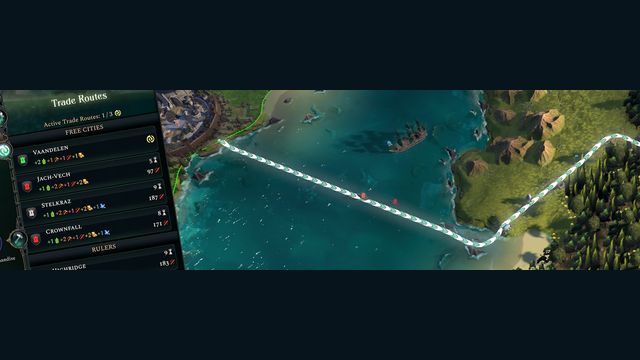
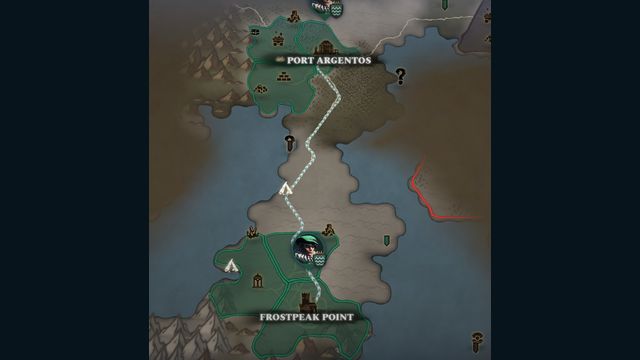
A Mercantile city is not a farm with a market attached. It is a node in a network, and its output scales with how many routes connect to it and from it. The culture's special province improvement, the Trade District, can be built on land or water and pays a decent base gold income plus an additional gold income for each trade route connecting to the city — including routes owned by other empires that connect to you, not just the ones you build.
That last clause is the part people miss. If you sign a Free Trade Agreement with a neighbour, their routes into your city pay you through your own Trade District. A Mercantile city can therefore make money off a partner's economy without spending its own draft, which is the closest the game gets to a passive income strategy.
| Structure | Where it goes | What it pays |
|---|---|---|
| Trade District | Land or water province | Base gold, plus gold per route connecting to the city |
| Warehouse | City structure | Growth per trade route |
| Food Markets | City structure | Growth per trade route |
| Barony tier-3 structure | City | +1 trade route capacity, stability per route |
| Privateers Camp (Cartel) | Land or water province | Base gold, temporary stability from raiding and pillaging |
| Smuggling Network (Cartel) | City structure | Gold, plus food per foreign-city route |
| Black Market (Cartel) | City structure | Extra gold per foreign-city route |
| Informant Network (Cartel) | City | Stability, plus Imperium per foreign-city route |
On the battlefield, fight dirty
The culture's combat identity is "unfair advantage", and the two halves express it differently. The Barony is the straighter of the two: a sturdy shield unit in the Marine, a healer that restores 40 HP in the Magewright, and a tier-3 ranged unit, the Silvershot, that can put a 50% accuracy and 20% damage bonus on itself simply by not moving before it shoots.
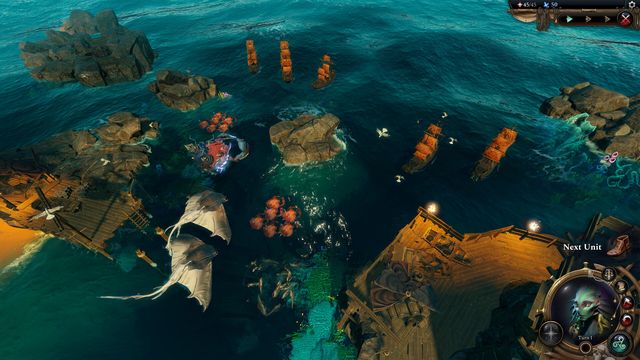
The Cartel is the one that actually fights dirty. Its units carry Observant, which applies Leverage to enemies within range 4 as long as the Cartel unit is not engaged in melee. Leverage stacks, increases damage from the next flanking attack by a flat amount, and bypasses status effect resistance, so a Leveraged target can be hit with damage, a stun, or even a dominate effect that would otherwise be resisted.
How a Mercantile run actually goes
The opening is slower than a Barbarian or Industrious start, because you are spending draft on routes instead of units. The payoff arrives in the mid-game, when a city with four connections out-earns a city with four farms and you can afford to buy the army you did not build.
The risk is that your income is physically distributed. Routes can be raided in open war, and every raid is a small battle against the route's escort. Winning one pays the raider three turns of that route's income, which means a profitable Mercantile empire is also a profitable target. Escorts scale with the trade structures in the origin city, so the same buildings that raise your income also raise the cost of stealing it.
Who should play it
Play Mercantile if you like economies more than battles and you are willing to defend a network rather than a border, with all the spread-out risk that implies. Leave it alone if you want a straightforward military culture or dislike naval movement, the culture's best positions are on water, and reaching them costs 20 movement points per unit.
For the subculture decision, the Cartel vs Barony comparison lines up the affinities, structures and tier-3 units. If you want the system underneath the culture, read trade routes first; the culture is a set of modifiers on top of it.