How water combat works now
Embarking is a flat 20 movement points, embarked units pay movement to turn, and every ship now uses your faction's look with three boat skins chosen at creation.
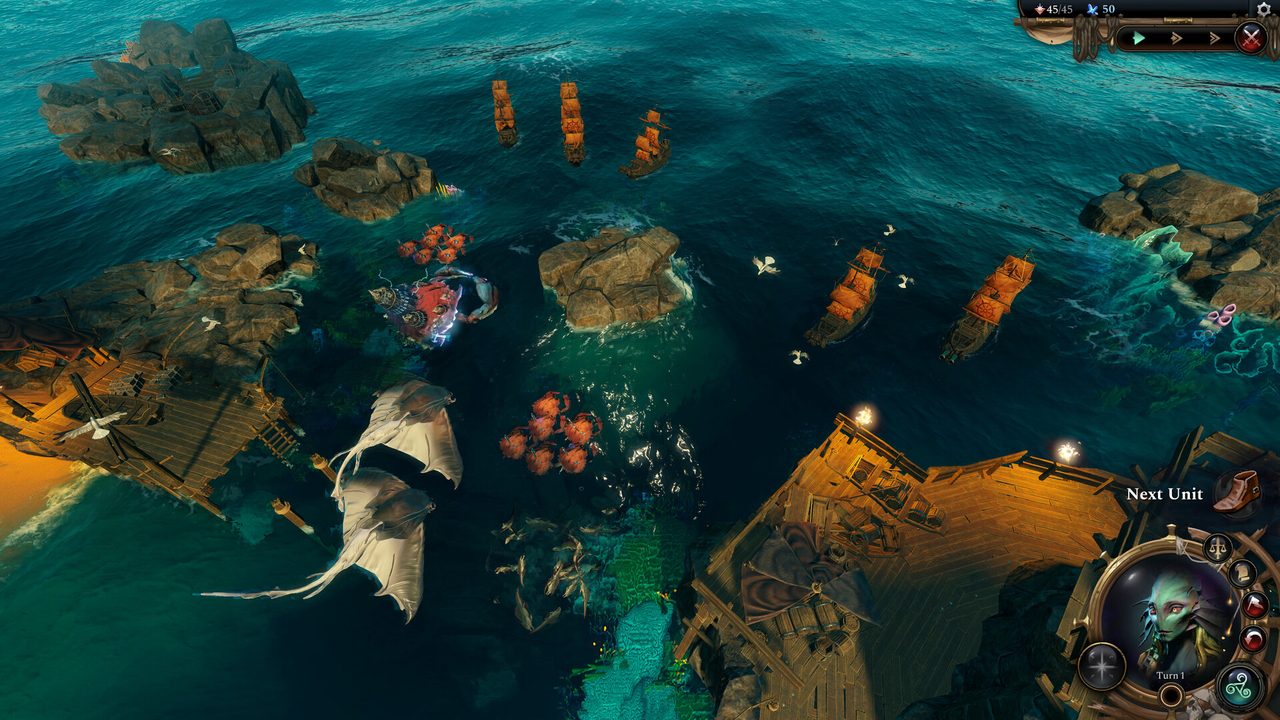
Water combat in Age of Wonders 4 used to be an afterthought: you embarked, you became a slow vulnerable blob, and you hoped the crossing was short. The Manta update rebuilt the whole layer — movement, turning, ship appearance, animations, even the battle maps, and the result is that a naval fight is now something you can plan for rather than something that happens to you.
This is the free part of the update. You do not need The Silver Seas to benefit from any of it.
The movement rules
Embarking costs a flat 20 movement points. Previously it consumed all of a unit's movement with a minimum of 12, which meant a fast unit paid more and a slow unit paid almost everything. Now the cost is fixed: fast units cross cheaply, slow units pay proportionally less than they used to, and a unit with less than 20 movement left cannot embark at all.
Embarked units pay to turn. They have their own turning and positioning rules, and each turn costs movement. A full reversal eats whatever is left of the unit's movement for the turn. That makes heading matter: a ship pointed the wrong way is a ship that does nothing this turn.
Aquatic units get the embarked vision bonus. Both embarked units and aquatic units now receive +2 vision, so a cheap aquatic scout is a genuinely good map reveal.
| Action | Cost | Note |
|---|---|---|
| Embark | 20 movement points | Flat, regardless of unit speed |
| Turn while embarked | Movement, scaled by turn angle | A full reversal consumes all remaining movement |
| Disembark | Normal movement rules | Plan the landing hex before you commit |
| Walk on ice (Whiteout) | Normal land movement | Avoids the embark cost entirely |
Ships look like your faction now
Every ship reflects the faction that sails it, and there are three new Boat Skins to choose during faction creation. New attack animations and unit enchantment visuals were added, so an enchanted unit's ship shows the enchantment rather than looking like a generic hull.
The ocean battle maps were redressed with corals, kelp and sea life. That is cosmetic, but it matters for readability: a water map with structure is easier to read than a flat blue grid, and the new props give you landmarks to orient by.
Map changes
- Oceans are bigger and continents are more consistent in size, because the random map generator was retuned to let oceans shape a realm.
- AI continents can be connected by land, which stops the AI from being stranded on an island it cannot leave.
- More ocean resources were added, so a naval start is less starving than it used to be.
- The harsh magma/water boundary was removed, which is a visual fix but a noticeable one on volcanic maps.
- Terrain was renamed: Ocean is now Deep Ocean, Coastal is now Ocean, and Water is now Underground Water.
Those renames matter when you are reading tooltips or planning a city. "Ocean" in the new UI means what used to be "Coastal", the shallower, more settleable band.
How to fight on water
The tactical problem with naval combat is that embarked units are fragile and turning is expensive, so the side that gets to choose the engagement usually wins. Three habits help:
- Screen with aquatic units. They do not embark, they see further, and they can pin an enemy fleet while your transports come in behind.
- Land first, fight second. A fight on the beach is a land fight, and your land army is better at those.
- Use ice instead of water. Whiteout and Ice Fusion both let units walk on frozen water, which bypasses the embark cost and the turning rules entirely.
The last one is the expansion's biggest tactical shift. A faction with Eternal Ice can bring a full melee army across a sea without ever embarking, which means the usual naval advantage — mobility and reach — stops mattering against them.
The new sea wildlife
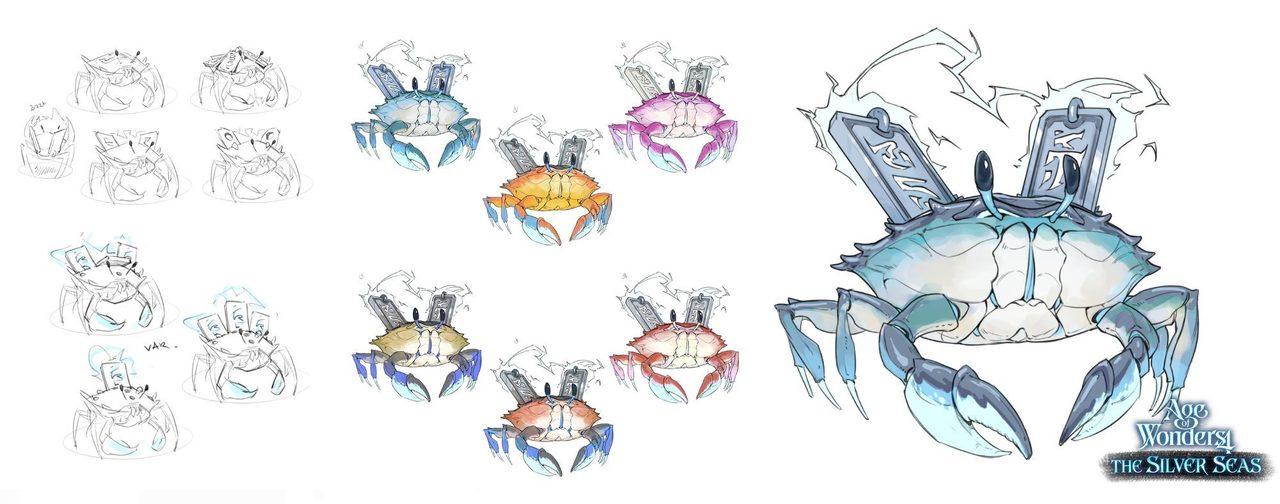
The expansion adds creatures that punish an unprepared fleet: Frenzied Fish Swarm, Accursed Wisp, Hoarfrost Manta, Seamare, and Lightning and Storm Rune Crabs. The crabs are the ones tied to the map: they generate the currents of the Tempestuous Vortex, and they appear as both tier II Lightning Rune Crabs and a tier IV Storm Rune Crab.
Treat them as terrain hazards with legs: a fleet that sails into a crab pack without ranged support loses ships it cannot replace quickly, and the survivors arrive damaged.
Common mistakes
- Embarking with less than 20 movement. The unit cannot move and is a free target.
- Reversing in place. A full turn reversal ends the unit's turn.
- Fighting the escort instead of the fleet. Raiding a trade route is a 1v1 against escorts; a naval battle is a different fight with different rules.
- Ignoring the shallows. Ocean is now the shallow band, and it is where you can actually settle.
The sea cities page covers what you can build out there, and the Manta update lists the rest of the free changes.