Cartel or Barony: pick a Mercantile subculture
Cartel is Shadow/Chaos: hidden smuggling routes, Leverage stacking, Mage Slayer. Barony is Shadow/Materium: bigger outposts, bounties, Silvershot ranged damage.
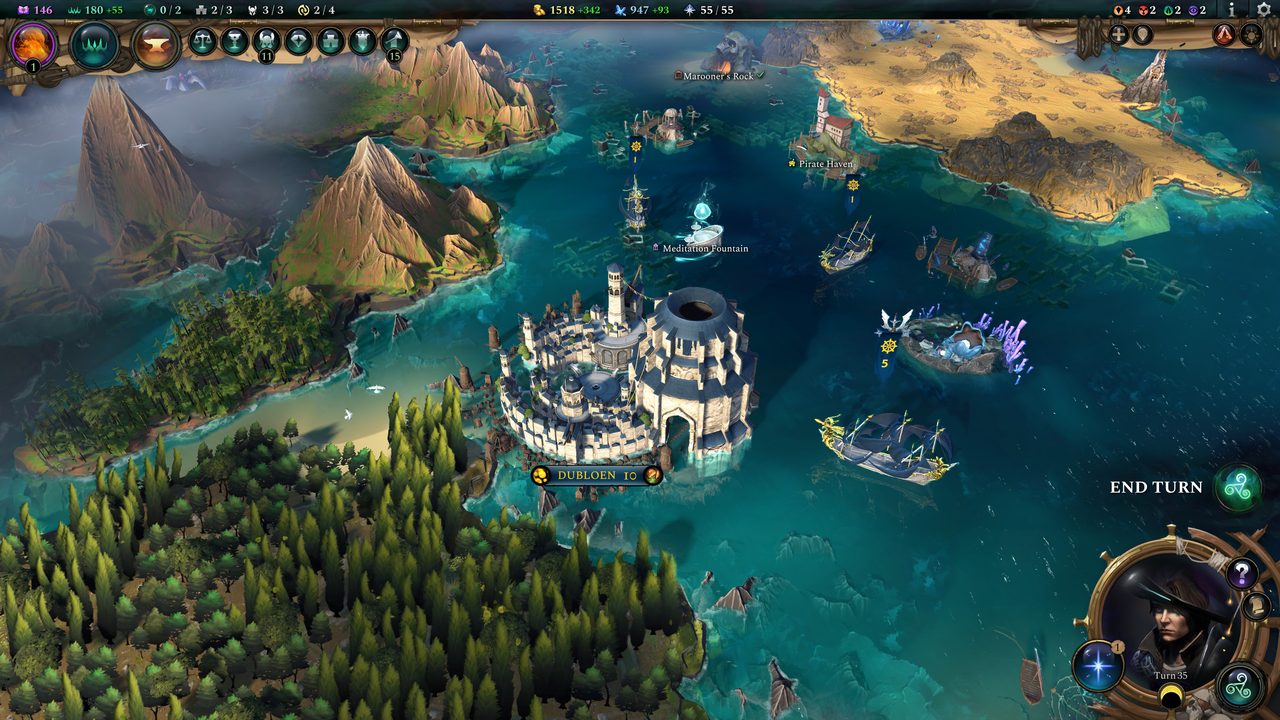
Both Mercantile subcultures can found cities on water and both get rich from trade routes. That is where it ends. The Barony is a land-grabbing aristocracy with a mercenary army and a very good rifle; the Cartel is a smuggling operation that treats other empires' cities as customers whether they agree or not.
Picking between them changes your affinities, your city structures, your unit roster and the way you are supposed to fight.
The short comparison
| Question | Barony | Cartel |
|---|---|---|
| Affinities | Shadow + Materium | Shadow + Chaos |
| Theme | Wealthy trade princes, mercenary armies | Subterfuge, manipulation, fighting dirty |
| Trade routes | Normal routes, more of them, bigger outposts | Hidden smuggling routes that reach hostile cities |
| Outposts | Improved Work Camp claims 2 extra provinces; Envoy builds outposts | Standard outposts, Informant cannot build them |
| Combat focus | Sturdy frontline, powerful ranged damage | Flanking, Leverage, stolen buffs |
| Special province | Trade District: gold per connecting route | Privateers Camp: stability from raiding |
| Tier-3 unit | Silvershot: long-range, high-damage rifle | Mage Slayer: anti-caster, steals buffs |
| Best at | Building a dense, safe trade hub | Punishing empires that rely on buffs and formations |
Barony: claim it, then tax it
The Barony's advantage is speed of expansion. Its Envoy scout builds outposts without a hero, and Barony outposts use an Improved Work Camp that claims two additional provinces instead of one. A Barony empire covers more map with fewer units, and every outpost can be connected by a route.
In battle the Barony assigns bounties. Support units and heroes get Assign Bounty, and every other culture unit gets Bounty Hunter, which reduces damage taken from the marked unit and increases damage dealt to it. Any unit that kills a marked target gets bonus experience whether or not it has Bounty Hunter, so the whole army benefits from focus fire.
Its tier-3 unit, the Silvershot, is one of the better ranged units in the expansion. Steady Aim gives 50% accuracy and 20% more damage if it starts the turn unengaged and has not moved. Silver Bullet Shot forbids movement but reaches range 6 with Giant Slayer.
Cartel: paid by people who hate you
The Cartel skips the diplomacy step. Its trade routes are hidden — visible to other players only while one of their units stands on the route, and they can connect to other empires without a Free Trade Agreement, including hostile ones. Income is lower without the agreement, which still matters: it brings those routes to full value.
In combat the Cartel plays around Leverage. Its units have Observant, applying Leverage to enemies within range 4 while unengaged, and Leverage makes the next flanking attack hit harder and bypass status resistance. That is how a Cartel army kills things it should not be able to kill: not with raw damage, but by stacking a debuff that turns a flank into a stun or a dominate.
The Cartel's tier-3, the Mage Slayer, is built to switch off enemy plans. Its Magic Strike has an extremely high chance to inflict Mana Drained, which disables magic, support and debuff abilities, and Arcane Interrogation steals every positive status effect from a target, converting each one into Frost damage plus Leverage while healing the Mage Slayer.
Which one to take first
Take the Barony for a first Mercantile run. Its expansion is forgiving, its frontline is sturdier, and its structures reward the straightforward loop of claim, connect, build. It also has the easier time defending routes, because it tends to own the territory the routes pass through.
Take the Cartel if you already know the game and want to play economics as a weapon. Hidden routes are genuinely strong against players and AI that do not patrol their own territory, and Leverage gives you an answer to buff-stacking bosses and hero stacks that raw damage struggles with.
Neither choice locks you out of the shared units: both get the Hireling and the Bravo. The unit list has the full roster, and the culture overview explains the system both subcultures sit on.
The affinities are not cosmetic
Both subcultures share Shadow, which means both get access to the same shadow-flavoured tomes and the same affinity perks at the first tier. The second affinity is where they diverge, and it shapes which tomes feel natural:
- Barony takes Materium, the production and gold affinity. That suits a culture that wants to build wide, hold ground and field expensive units, and it makes Materium tomes a cheaper dip for a Barony player who wants better cities.
- Cartel takes Chaos, the aggression and disruption affinity. That suits a culture that wants to strike first, apply debuffs and profit from disorder, and it makes Chaos tomes a natural second pick for a Cartel player who wants more damage.
In practice this means the subculture choice quietly decides your second tome tree as well as your unit line. A player who wants Hydromancy plus Materium is playing Barony; a player who wants Piracy plus Chaos is playing Cartel.
A note on raids
Both subcultures can request raids from Free Captains, but they use them differently. The Barony raids to weaken a rival it intends to vassalise, because a weakened province is cheaper to absorb. The Cartel raids to destabilise a city it is already smuggling into, because a city with a riot and a hidden route is a city paying twice.