A Mercantile opening that survives contact
Take Barony for a safe first run, build the Trade District before your second city, and use Hydromancy to cover the culture's weak early control. This is a route, not a ranked list.

This is not a tier list and it does not contain damage-per-turn numbers, because those numbers are not published and inventing them would be worse than useless. What follows is a build order: the choices that get a Mercantile empire through its weak opening without starving, and the tomes that cover the holes the culture leaves.
One sentence version: take the Barony, build the Trade District before your second city, and use Hydromancy to survive the mid-game.
Faction choices
| Choice | Recommendation | Why |
|---|---|---|
| Subculture | Barony | Sturdier front line, easier expansion, better first run |
| Form | Aqualon or Sharkkin | Either works; Aqualon for casters, Sharkkin for melee |
| Society trait | Children of the Waves | Merfolk from turn one, and it fits the water plan |
| Realm | Pirate Reefs | The expansion's own template, with the Free Captains present |
| First tome | Hydromancy | Control covers the culture's slow start |
The Barony recommendation is about margin for error, not power. The Cartel's hidden routes are stronger against a competent opponent, but they require you to know which cities are worth reaching before you can see them, and on a first run, you do not.
The first twenty turns
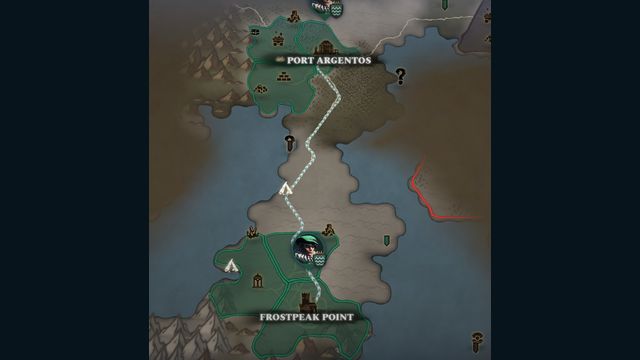
- Scout with the Envoy. It builds outposts without a hero, and Barony outposts claim two extra provinces. Every outpost you place early is a future route.
- Found the capital on or near water. A coastal capital gets cheaper routes to everything across the sea, and it can reach water provinces for the Trade District.
- Build the Trade District before the second city. It pays gold per connecting route, and every route you build afterwards multiplies it.
- Connect the nearest outpost before you claim another. An unconnected outpost produces nothing for you.
- Do not upgrade a water outpost until it has a route. A floating city with no connection starves.
The mid-game: routes, not armies
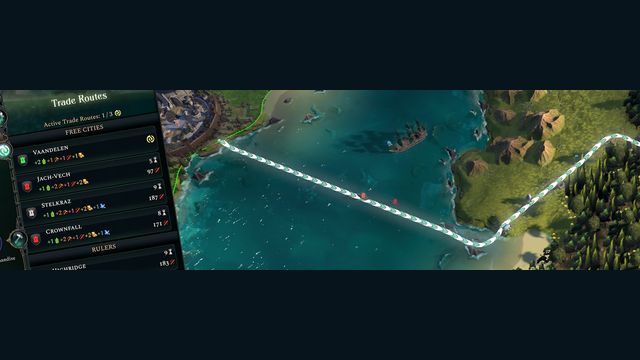
The Mercantile mid-game is about capacity. Every city starts with one route; the Trade Post at city tier 2, Trade Quarters at tier 3 and Trade Bazaar at tier 4 each add one, and the Bazaar's Caravaneer's Guild sub-structure adds another while cutting draft costs by 20%.
The order that works: Trade Post in every city, Trade Quarters in the cities closest to your partners, then the Bazaar in your hub. One city with four connections and a Trade District out-earns three cities with one connection each.
The army
The Barony army is a firing line with a shield in front. Marines hold, Silvershots shoot over them, a Magewright keeps the Marines alive, and a Bravo fills whatever gap opens. Add a hero with a Sword and Staff and you have a force that can hold a route against a raid without diverting your main army.
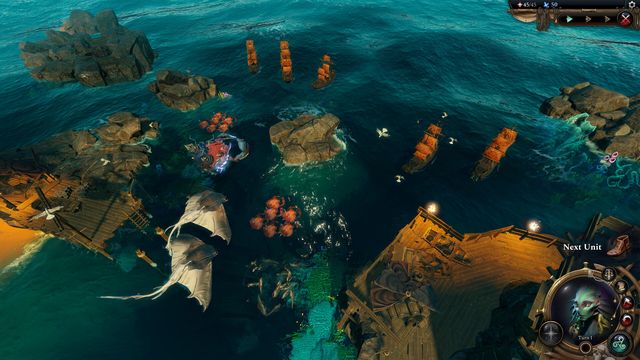
Do not build a navy you cannot supply: a fleet is only worth it if there is something on the other side to take.
The tomes
| Stage | Tome | Why |
|---|---|---|
| First | Hydromancy | Wet and immobilise cover the slow opening |
| Second | Piracy | Ember Dust and Rob turn raids into income |
| Third | The Damned or Eternal Ice | Attrition or terrain control, depending on the map |
| Capstone | Eternal Ice | Whiteout lets the army cross water without embarking |
The order is flexible after the first pick. Piracy is the aggressive choice; the Damned is the patient one; Eternal Ice is the one that changes how the army moves.
Where it struggles
It is slow. Mercantile cannot rush, and a Barbarian or Industrious neighbour will have more units than you for the first thirty turns. The answer is not to match them but to make attacking you expensive: routes pay for walls, walls protect routes, and a raid on a defended route is a losing battle.
It is also vulnerable to a naval power that ignores trade and simply takes your coastal cities. A floating city is hard to reach but not hard to siege, and the Barony is not a navy.
The one thing to get right
Connect before you expand. Every Mercantile mistake traces back to claiming a fourth outpost while the first three are unconnected. The culture's income is a network, not a territory, and a network with missing links is just a bill.
The culture overview explains why, trade routes has the capacity and cost tables, and the Cartel vs Barony page covers the subculture decision in more detail.
Turns 20 to 40
The second phase is where the build either compounds or stalls. The goal is three connected cities and one hub, not five cities and no network.
- Build the Trade Quarters in the hub city as soon as it hits tier 3, and pick Food Importers if your floating city is starving, Wizard's Exchange if your research is behind.
- Connect the second outpost before founding the third city. Capacity is per city, so a city with one route and a city with three cost the same to own and very different amounts to run.
- Start the second tome around turn 25. Hydromancy's control is enough to survive the early fights; Piracy's economy is what turns survival into a lead.
- Keep one army at home. The moment your whole military is away, a captain's raid or a neighbour's stack arrives at the least convenient city you own.
If you are behind at turn 40, the usual cause is unconnected outposts, not a weak army. Check the trade panel before you check your recruitment queue.